Where the Growth Is, What the Opportunities Are, and Why a Sales Brokerage Is Your Fastest Route to Market
Executive Summary
Spain’s food and beverage sector is one of the largest and most dynamic in Europe. With a food processing industry valued at $181 billion in 2024, a grocery retail market worth over €102 billion in 2025, and a tourism sector that welcomed a record 94 million international visitors in 2024, the demand for imported F&B products is large, growing and structurally supported by forces that are unlikely to reverse any time soon.
The total F&B market in Spain reached an estimated $28.8 billion in 2025 and is projected to grow to $37.1 billion by 2034 at a compound annual growth rate of 2.87 per cent. Within this, the organic food segment alone is expected to expand from $3.8 billion to $12.5 billion by 2033 — a 14 per cent CAGR — while functional foods, plant-based alternatives and premium imported ingredients are all growing at rates significantly above the broader market.
For international food and beverage companies looking to find a distributor in Spain, the opportunity is clear. But Spain is a complex, relationship-driven market with powerful domestic retailers, strong private-label penetration and distinct regional preferences. A well-connected sales brokerage in Spain can compress years of market development into months, connecting you directly with the buyers, distributors and retail decision-makers who matter.
This report provides a detailed analysis of the Spanish F&B import landscape, identifies the fastest-growing categories and channels, and explains why a brokerage-led market entry strategy delivers superior results.
Part 1: The Macroeconomic Backdrop — Why Spain, Why Now
Europe’s Fastest-Growing Major Economy
Spain’s economy has been outperforming the rest of the eurozone consistently since 2022. GDP grew by 3.2 per cent in 2024 — more than double the eurozone average — and expanded by a further 2.9 per cent in 2025. Forecasts from the European Commission, the OECD and the IMF all project continued above-trend growth of between 2.0 and 2.4 per cent through 2026 and 2027.
This matters for F&B importers because economic growth translates directly into consumer spending power. Spain’s unemployment rate fell below 10 per cent in 2025 for the first time since 2008, with over 22.4 million people in employment — a national record. Real wages are growing above inflation, household disposable income is rising, and retail food sales grew by 4.2 per cent in real terms in the first half of 2025, a marked acceleration from 1.3 per cent in 2024.
Population Growth Driving Demand
Unlike many Western European markets dealing with demographic stagnation, Spain’s population is expanding rapidly. The country added over one million residents between 2023 and early 2025, driven primarily by immigration. Population growth of around 0.8 per cent per year — well above the pre-pandemic average of 0.3 per cent — translates directly into more mouths to feed, more diverse dietary preferences, and expanding demand for both mainstream and speciality food products.
This immigration-driven growth is also changing the composition of food demand. Incoming populations bring new culinary traditions and create demand for ethnic ingredients, international brands and speciality products that were previously niche in the Spanish market.
Consumer Spending on Food: Structural Growth
Total Spanish consumer expenditure on grocery products rose from €82 billion to €131 billion over the past decade — a 60 per cent increase. While some of this growth is nominal (driven by food price inflation in 2022–2023), the underlying volume trend is positive, with real retail food sales now firmly back on an upward trajectory. The food market in Spain is projected to generate $118.69 billion in revenue in 2025, growing at 3.74 per cent annually through 2030.
Part 2: The Spanish F&B Landscape — Understanding the Market Structure
The Retail Channel: Consolidation and Private Label Dominance
The Spanish grocery retail market is highly concentrated. The top five chains — Mercadona, Carrefour, Lidl, Eroski and DIA — collectively hold over 51 per cent of the market. Understanding this structure is critical for any international brand trying to find a distributor in Spain.
Mercadona is the dominant force, with a market share approaching 29.5 per cent in 2025 and over 1,600 stores. It operates a heavily private-label model — over 80 per cent of its products are own-brand (primarily under the Hacendado label for food) — and its buyer relationships are famously difficult to penetrate without established local connections. Some 93 per cent of Spanish consumers shop at Mercadona at least once a year.
Carrefour holds second place with a 7.2 per cent share, operating a mix of hypermarkets, supermarkets and urban convenience stores (Carrefour Express). Unlike Mercadona, Carrefour stocks a wide range of branded products and has a dedicated international and organic section, making it a more accessible entry point for imported brands.
Lidl is the fastest-growing major retailer, with a 6.9 per cent share and aggressive expansion plans targeting over 1,000 stores. It combines a strong private-label core with a rotating selection of branded and speciality products, creating opportunities for niche importers.
Eroski, DIA, Consum, Alcampo (Auchan) and Aldi each hold between 1.8 and 4.3 per cent of the market, with varying degrees of openness to imported and branded products.
The key takeaway for international companies is that breaking into Spanish retail requires either a relationship with the centralised buying teams at one of these major chains, or a route through regional and speciality distributors who supply the independent and premium retail segment. A sales brokerage in Spain with established relationships across these channels can open doors that would take years to access independently.
The HRI Channel: Tourism as a Demand Engine
Spain is the world’s second most-visited country after France, and its hotel, restaurant and institutional (HRI) sector is a major demand driver for imported food and beverage products.
In 2024, Spain welcomed approximately 94 million international tourists — a new all-time record — and tourism contributed around 15.6 per cent of GDP, worth €248.7 billion. The WTTC forecasts this will rise to €260.5 billion in 2025. The sector supports roughly 3 million jobs, and international tourist spending exceeded €107 billion in 2024.
For F&B importers, the HRI channel offers several advantages over retail. Purchase decisions are made by chefs, procurement managers and food service distributors who are often more receptive to premium, speciality and international products than the mass-market retail buyers. Spain’s restaurant sector alone generates significant turnover, with an average ticket value of €31.20 per transaction for foreign tourists.
Key HRI trends relevant to importers include the growing demand for premium and speciality ingredients in fine dining and gastro-tourism, the expansion of international cuisine and fusion restaurants in major cities, rising demand for healthy, organic and sustainably sourced ingredients in hotel F&B, and the growth of ready-meal and prepared food solutions for the food service sector.
The HRI channel is fragmented and regional, which makes it ideal for a brokerage-led approach. A well-connected sales brokerage in Spain can introduce you to the food service distributors, hotel group procurement teams and restaurant chain buyers who represent the most valuable commercial opportunities.
The Foodservice Distribution Network
Spain’s food distribution system operates through several layers. At the top are large national distributors and cash-and-carry operators. Below them sit regional wholesalers, speciality importers and local distributors who serve specific geographies or product categories.
For imported F&B products, the typical route to market runs through a specialist importer or distributor who handles customs clearance, warehousing, regulatory compliance and last-mile delivery to retail or HRI customers. Finding the right partner in this network is the single most important decision an international F&B company will make when entering Spain — and it is the area where a sales brokerage delivers the most value.
Part 3: Where the Growth Is — High-Opportunity F&B Categories
1. Organic Food and Beverages
Spain’s organic food market is one of the fastest-growing segments in the entire F&B landscape. Valued at $3.8 billion in 2024, it is projected to reach $12.5 billion by 2033 — a 14 per cent CAGR that dwarfs the broader food market’s growth rate.
Spain holds the second-largest area of organic agricultural land in the EU (after France) and ranks fourth worldwide. However, domestic organic production is heavily export-oriented, meaning that demand for imported organic products — particularly processed organic foods, organic snacks, organic dairy alternatives and organic speciality ingredients — remains strong and growing.
Consumer demand is being driven by rising health consciousness, increasing environmental awareness, growing availability through both online and offline channels, and a younger generation that prioritises ethical and sustainable food choices. Private label dominates the organic segment in Spain, but there is significant room for branded organic products that offer genuine differentiation.
2. Plant-Based and Alternative Proteins
Spain is the fourth-largest plant-based food market in Europe, behind Germany, the UK and Italy, and the sector anticipated 10 per cent growth in 2025. Spain is also Europe’s second-largest consumer of dairy alternatives, with household penetration of plant-based milk alternatives reaching 40 per cent.
The market is being driven by domestic innovators like Heura Foods (plant-based meat and cheese), Sanygran (B2B plant-based solutions) and Liquats Vegetals (plant-based beverages), as well as strong demand for international brands. Major product categories with growth potential include plant-based meat alternatives and ready meals, dairy-free beverages (oat, almond, soy, rice), plant-based cheese and yoghurt, high-protein snacks and bars, and mycelium and fermentation-based products.
Spain has positioned itself as one of Europe’s leading foodtech hubs, with initiatives like ICEX Foodtech Nation and centres like CNTA, Azti, AINIA and the Basque Culinary Center driving innovation. For international companies in the plant-based space, Spain offers both a growing consumer market and access to a sophisticated R&D ecosystem.
3. Functional Foods and Health-Oriented Products
Spanish consumers increasingly seek foods with benefits beyond basic nutrition. Demand is rising across several functional categories: probiotic and prebiotic foods (yoghurts, fermented products, gut health supplements), protein-fortified snacks and meals, products enriched with vitamins, minerals and antioxidants, superfoods (chia, turmeric, spirulina) in beverages and snack formats, and reduced-sugar, low-salt and clean-label reformulations.
Research from Innova Market Insights confirms that Spanish consumers are attracted to products that are high in fibre or protein and contain functional ingredients. Health and lifestyle needs are a priority in categories like hot drinks, energy bars and dairy. The Mediterranean diet remains a cultural foundation, but consumers are open to products that modernise and enrich this tradition with science-backed functional benefits.
4. Premium and Speciality Ingredients
Spain’s food processing industry — the largest industrial sector in the country, with a gross added value of $32.5 billion — is a major consumer of imported ingredients. The industry consists of approximately 28,000 companies, predominantly small and medium-sized, producing everything from prepared meals and bakery products to sauces, confectionery and beverages.
Demand for imported food processing ingredients is growing, driven by product reformulation toward cleaner labels, the expansion of ready-meal and convenience food production, the growth of plant-based and alternative protein manufacturing, new product development in health and wellness categories, and the premiumisation trend across multiple food categories.
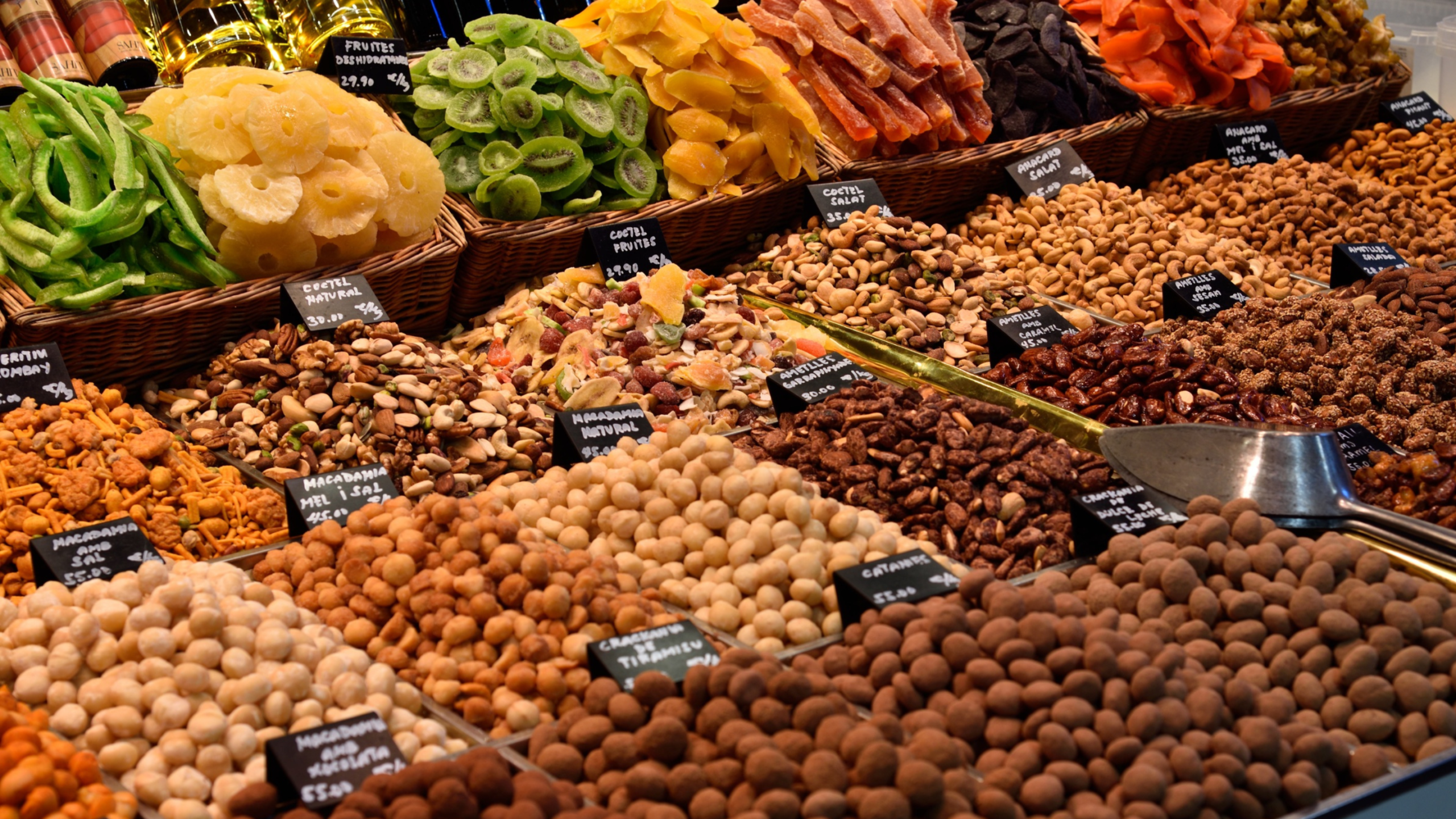
Key imported ingredient categories with strong demand include tree nuts and dried fruits, chocolate and cocoa products, flavourings and extracts, protein isolates and concentrates, speciality fats and oils, and food additives and functional ingredients.
5. Snack Foods
Spain’s snack food market is projected to reach €4.93 billion in 2025, growing at a 4.55 per cent CAGR through 2029. The market is being reshaped by health-conscious consumer preferences, with strong demand for organic and gluten-free snacks, low-sugar and high-protein bars, nut and seed-based portable snacks, and premium artisanal crisps and savoury snacks.
International snack brands that offer clean-label, health-positioned products with genuine points of difference can find significant distribution opportunities in Spain, particularly through the speciality retail, organic retail and HRI channels.
6. Beverages
The Spanish beverage market presents a nuanced picture. While overall per-capita beverage consumption declined slightly in 2024 (down 3.1 per cent to 131.9 litres per person), specific sub-categories are growing strongly. Health and wellness beverages (kombucha, functional waters, fortified teas), premium and craft spirits, non-alcoholic and low-alcohol alternatives, ready-to-drink coffee and tea, and plant-based dairy alternative beverages all represent growth segments where imported brands can compete effectively.
The premiumisation trend is particularly notable in coffee and tea, with new fruit and plant mixes, exotic flavours and single-origin products gaining traction. The fresh juice category is also gaining ground in both retail and foodservice as consumers perceive it as a healthier alternative to nectars and concentrates.
Part 4: Consumer Trends Shaping Import Demand
Understanding what drives the Spanish consumer is essential for any company planning to find a distributor in Spain. Several macro trends are reshaping purchasing behaviour.
Clean Label and Transparency
Spanish consumers want products with real, natural ingredients and no artificial flavours, colours or palm oil. They value integrity, authenticity and transparency. This trend strongly favours imported products that can demonstrate genuine provenance, artisanal production methods and transparent supply chains.
Local and Sustainable Sourcing
While this might seem to disadvantage imported products, it actually creates a specific opportunity for international brands that can tell a compelling sustainability story. Products that are certified organic, Fairtrade, B-Corp or otherwise credentialled for environmental and social responsibility resonate strongly with Spanish consumers, regardless of origin.
Premiumisation
Despite ongoing price sensitivity (Spain’s grocery market has seen a sustained shift toward private label), there is a parallel trend toward premiumisation in specific categories. Consumers are willing to pay more for products they perceive as healthier, more sustainable, more authentic or offering a genuine taste experience. This creates a viable market position for imported premium products that can justify their price point.
E-Commerce Growth
Online grocery shopping in Spain is growing rapidly, with e-commerce now accounting for a meaningful share of food retail. This channel is particularly important for speciality and imported products that may not yet have widespread physical distribution. It offers a lower barrier to entry and a way to build brand awareness before pursuing broader retail distribution.
Convenience and Ready Meals
Mercadona has invested heavily in ready meals, and this category is growing rapidly across the retail sector. The trend reflects changing lifestyles, with more dual-income households and less time for traditional cooking. For importers, this creates demand for both finished ready-meal products and the ingredients that go into them.
Part 5: Why a Sales Brokerage Is the Fastest Route into Spain’s F&B Market
The Distribution Challenge
Spain’s F&B distribution landscape is complex, fragmented and relationship-driven. For an international company without existing connections, the barriers to entry are significant.
The major retail chains have centralised buying teams that are difficult to access. Mercadona, in particular, works almost exclusively with established suppliers and rarely takes unsolicited approaches. Carrefour, Lidl and the other major chains have structured listing processes that can take months to navigate, even with a strong product.
The HRI channel is fragmented across thousands of independent restaurants, hotel chains and food service companies, each with their own procurement processes and supplier relationships.
Regional distribution networks operate differently in Catalonia, the Basque Country, Andalusia, Valencia and Madrid, with distinct business cultures, language preferences and commercial norms.
What a Sales Brokerage in Spain Delivers
A specialist sales brokerage in Spain solves these challenges by providing pre-qualified introductions to the distributors, retailers and food service buyers who are the best fit for your specific product portfolio.
Market intelligence and mapping. A good brokerage will assess the competitive landscape for your products, identify which channels and regions offer the best opportunity, and map the distributor universe to create a targeted shortlist of potential partners.
Warm introductions. The most valuable asset a brokerage brings is relationships. In Spain, business is built on personal trust and face-to-face interaction. A brokerage that already has relationships with the buying teams at major retailers, the procurement directors at hotel groups, and the management of speciality food distributors can get you meetings that cold outreach simply cannot.
Cultural and commercial navigation. Spain has its own business rhythms, negotiation styles and commercial expectations. Payment terms, listing fees, promotional requirements, labelling regulations and distribution agreements all have local specificities that a brokerage can help you navigate.
Speed to market. Perhaps the most important benefit is time. A sales brokerage can compress what would normally be a 12 to 24-month market entry process into three to six months. In a market growing as fast as Spain’s F&B sector, that speed advantage translates directly into revenue and market share.
Reduced risk. By working with a brokerage, you avoid the common and costly mistakes of market entry: choosing the wrong distributor, underpricing or overpricing for the market, misunderstanding regulatory requirements, or investing in channels that do not suit your product. The brokerage’s local expertise acts as a risk filter, ensuring your investment goes where it will have the most impact.
The Brokerage Advantage vs. Other Entry Models
Hiring a local sales team before validating the market is expensive and risky. Trade shows generate leads but rarely convert without sustained local follow-up. Trying to manage the market remotely from your home country is slow and ineffective in a relationship-driven culture.
A sales brokerage in Spain offers the local presence, market knowledge and commercial relationships of a full in-market team, without the overhead, risk or time commitment. It is the most capital-efficient way to find a distributor in Spain and begin generating revenue in the shortest possible timeframe.
Part 6: Practical Steps — How to Enter Spain’s F&B Market
Step 1: Assess Your Product-Market Fit
Before engaging a brokerage or pursuing distribution, ensure your products are relevant to the Spanish market. Consider whether your product addresses a genuine gap or growing trend (health, organic, plant-based, premium, convenience), whether your pricing can work within Spanish retail and distribution margins, whether your labelling and packaging comply with EU and Spanish regulations, and whether you have the production capacity to supply the market reliably.
Step 2: Engage a Specialist F&B Sales Brokerage
Look for a brokerage with deep expertise in the food and beverage sector specifically. General sales consultancies lack the industry relationships and category knowledge that make brokerage introductions valuable. Ask for evidence of existing relationships with Spanish retailers, distributors and food service buyers.
Step 3: Develop Your Spanish Market Proposition
Work with your brokerage to adapt your positioning for the Spanish market. This may include developing Spanish-language packaging and marketing materials, adjusting pack sizes or formats to suit local preferences, creating a pricing strategy that accounts for distributor margins, listing fees and promotional costs, and identifying the specific certifications or claims (organic, gluten-free, vegan, Nutri-Score) that will resonate with Spanish buyers.
Step 4: Target the Right Channels
Not every product belongs in every channel. Your brokerage should help you identify whether your initial entry point should be speciality retail and organic stores, major grocery retail (and if so, which chain), the HRI and food service channel, online retail and direct-to-consumer, or food processing and ingredients supply.
Step 5: Build Relationships and Commit
Spain rewards commitment. Distributors and buyers want to see that you are serious about the market, willing to invest in promotional support, and available for regular in-person visits. The companies that succeed in Spain are the ones that treat it as a strategic priority, not a secondary export market.
Conclusion
Spain’s food and beverage import market is large, growing and structurally supported by economic expansion, population growth, booming tourism and shifting consumer preferences toward health, sustainability and premiumisation. The opportunity spans organic food, plant-based alternatives, functional ingredients, premium snacks, speciality beverages and food processing ingredients.
But the market is also complex, concentrated and relationship-driven. The companies that will capture the most value are those that enter with the right partners, in the right channels, with the right proposition. A specialist sales brokerage in Spain provides the fastest, most efficient and lowest-risk path to finding those partners.
If you are looking to find a distributor in Spain for your food and beverage products, the time to act is now. The macroeconomic tailwinds are strong, the consumer trends are favourable, and the window for establishing market position ahead of competitors is open. A well-connected sales brokerage in Spain can help you seize it.
This report was compiled in February 2026 using the latest available data from the European Commission, OECD, USDA Foreign Agricultural Service, CaixaBank Research, BBVA Research, IMARC Group, Innova Market Insights, Statista, NielsenIQ, Worldpanel by Numerator, and the World Travel & Tourism Council.
Get in touch to find your sales agents in Spain:

Build your revenue engine in Spain
Distribute Spain is the trading name of NMCC Consulting FZE, operating out of: Business Centre, Sharjah Publishing City, Sharjah, United Arab Emirates.
While we operate out of the UAE for ease of facilitating global transactions, our presence is very much in Spain. Please reach out to +447871868450 for any questions or email info@distributespain.com
©2026. All rights reserved.